Signs Your Yard Line Is Leaking Between the Meter and the House
The pipe buried in your lawn leaks quietly, and in most cases it is the homeowner's to fix.
October 6, 2026 · 4 min read
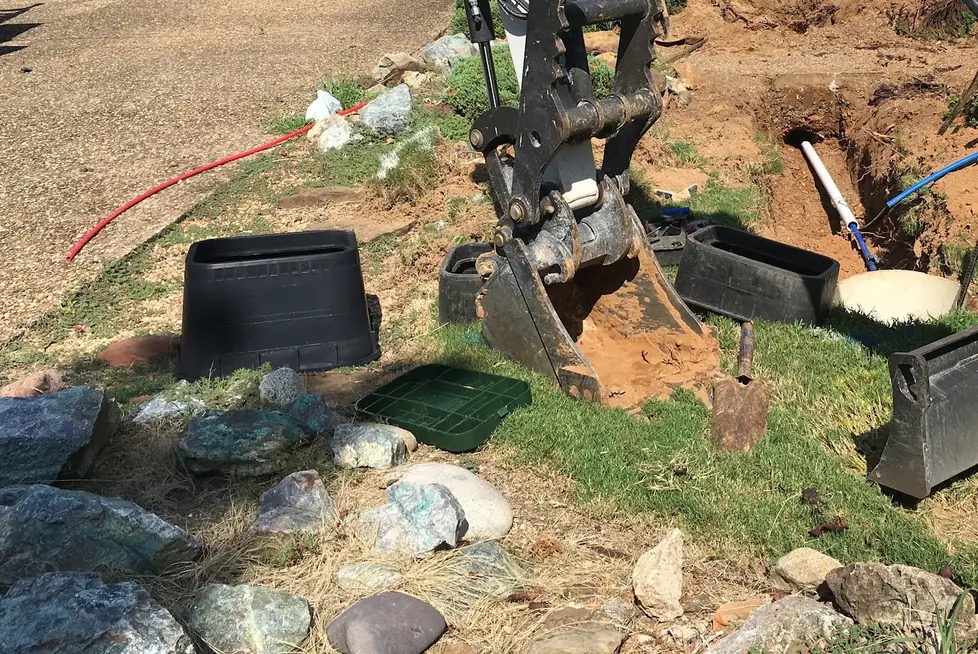
Why the yard line is usually your responsibility
Your water arrives through a main under the street, passes through a meter, and then runs underground to your house. That last stretch, from the meter to your foundation, is the yard line. Many water line leaks happen in exactly this section, and the line is typically the homeowner's responsibility to maintain. If it leaks, the repair is yours to arrange.
Ownership can vary a little by utility, so if you aren't sure where the city's responsibility ends, ask your water provider. The meter is usually the dividing line. Everything on your side of it, including the pipe buried in your lawn, is the part you'll be dealing with.
Here's what makes this line tricky. It's out of sight, so it can leak for weeks before anything tells you. The water soaks into the soil and disappears, and the first clue is often a water bill that makes no sense.
Signs you can see in the yard
Start outside, because the ground often shows it first. Walk the path between the meter and the house after a dry stretch and look for these:
- A damp or muddy spot that stays wet even when it hasn't rained
- A strip of grass that is greener or growing faster than the lawn around it
- Soft ground that squishes underfoot or leaves a footprint that fills with water
- A dip, sag or small sinkhole along the route the line probably takes
- Water pooling in or around the meter box
Keep in mind that the wet spot isn't always right over the break. Water follows the path of least resistance, and in clay it can travel a long way along the pipe trench before it comes up. The leak may be several feet from where the lawn looks soggy.
Signs you can notice inside the house
Some yard line leaks never reach the surface at all, especially in heavy clay that holds water like a bowl. In that case the house tells the story:
- A sudden drop in water pressure throughout the whole house
- An unexplained spike in your water bill
- Discolored or rusty water coming from the faucets
- A hissing or gurgling sound in the plumbing when nothing is running
- A water meter that keeps moving when every fixture is off
One of these alone could have another cause. Two or three together, especially a higher bill and weak pressure, point strongly at the line outside.
A five-minute meter test
You can narrow it down without any tools. Turn off every faucet, the ice maker, the washing machine and any irrigation. Then open the meter box and find the leak indicator, usually a small dial or triangle that spins when water is moving. If your meter doesn't have one, write down the numbers on the register and the time.
If the indicator is turning with everything off, or the numbers have changed after twenty or thirty minutes, water is going somewhere. Next, close the main shutoff valve where the line enters your house and check the meter again. If it's still moving with the house valve closed, the leak is in the yard line between the meter and the house. If it stops, the leak is on the house side, and that's a different job.
Take a photo of the meter and note the time. A plumber will find it useful, and it gives you a record if you need to ask your utility about a bill.
Why Northwest Arkansas yards are hard on buried lines
Soil here moves. Clay swells when it's wet and shrinks when it dries, and a buried pipe gets pushed and pulled through every season. Add hard freezes in winter, tree roots hunting for moisture, and older installs where rocks were shoveled back into the trench, and a line that held for years can start to fail. Lines running out from a house wear and corrode over time, and in this ground that wear shows up sooner.
A small leak under pressure also washes soil away from the pipe, which gives it room to move and crack further. A slow weep can turn into a break, and a break can undermine the ground around it. That's the reason not to wait on a wet spot you can't explain.
What to do when you suspect a leak
- Write down the meter reading and the time, and take photos of any wet spots
- Close the main shutoff at the house if water is pooling or pressure has collapsed
- Stop running irrigation on that zone so you don't hide or add to the problem
- Don't dig on your own, because buried utilities have to be located before anyone puts a shovel in the ground
- Call a plumber who works on underground lines and will diagnose before digging
Hansen Plumbing Pro in Lowell handles water and yard line repair and replacement for homeowners across Benton and Washington Counties, from the meter to the house, with its own excavator, backhoe and dump truck. Estimates are free, and emergency calls are answered around the clock. If your yard or your water bill is telling you something, call (479) 236-1861.
Hansen Plumbing Pro, (479) 236-1861
Call (479) 236-1861More articles
Patch the Leak or Replace the Whole Yard Line
A patch is the cheaper-looking choice on day one, and sometimes it is the right one. Often it isn't.
Trenchless vs Dug Water Line Replacement in Northwest Arkansas Yards
Replacing a water line no longer always means a trench across the lawn, though sometimes it still does.