Patch the Leak or Replace the Whole Yard Line
A patch is the cheaper-looking choice on day one, and sometimes it is the right one. Often it isn't.
October 6, 2026 · 4 min read
A leak is usually a symptom
When a yard line leaks, the natural question is how fast and how cheaply it can be stopped. That's reasonable. But the better question is why it leaked, because the answer decides whether a patch will hold or whether you'll be digging the same yard up again next year.
A line can fail at one spot for a one-time reason, like a nick from a shovel or a fitting that was never glued well. It can also fail because the whole run is aging, corroded or damaged along its length. In the first case a repair makes sense. In the second, a repair just moves you to the next leak.
A homeowner's story about rocks in the ditch
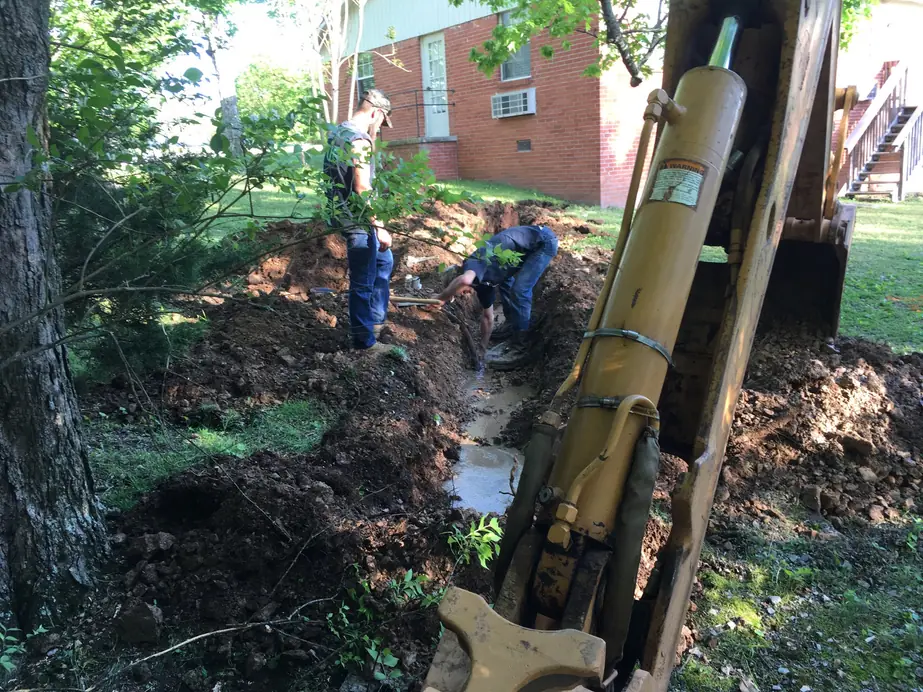
In 2016, a customer named Rick Simpson wrote about his yard line failure at Hansen Plumbing. He called, and within a couple of hours John Hansen was on site confirming that the yard line had failed. The next morning John came rolling in with his backhoe and crew and started digging.
What they found is common in older installs. When the original line went in, rocks had been piled back into the ditch on top of the pipe. Over the years those rocks pressed into the PVC and punctured it in more than one place. John replaced the entire line in plastic instead of patching the leaks they had found.
Rick wrote that John "could have just as easily repaired the first leaks we found setting us up for future service calls, but he did not." He called the reasoning "solid" and "commonsensical." By the end of the day the family had water again with no leaks, and considering how wet the yard was, the crew put everything back together well.
When a patch makes sense
Repairs are the right call more often than people expect, as long as the rest of the pipe is in good shape. A spot repair tends to work when:
- There is one clear break and the pipe on both sides looks sound once it's exposed
- The damage has an obvious outside cause, such as a shovel, a stake or a trencher
- The line is fairly new and made of material that is holding up
- The failure was at a fitting or connection, not in the pipe itself
A good plumber will tell you if the pipe they uncover looks healthy, and will say so even when replacing would be the bigger job.
When replacing the whole line makes sense
Replacement starts to win when the evidence points to a line that is worn out, not just hurt in one place:
- You've already repaired it once or twice and a new leak keeps showing up
- The pipe is corroded, brittle or visibly pitted when it's uncovered
- You find rocks, debris or sharp fill sitting directly against the pipe
- More than one leak shows up in the same dig
- The line is old enough that its material is a known weak point
Hansen Plumbing Pro describes the problem plainly: plumbing lines running out from your house can become worn or corroded over time. When that's what you're looking at, a patch is a bet that the next weak spot will hold out longer than you'll need it to.
The cost of digging twice
The expensive part of a yard line job is rarely the pipe. It's the excavation, the cleanup and putting the yard back. Every time the ground is opened, you pay for that again, plus the water you lose and the lawn and landscaping you rebuild. A patch that fails in two years can cost more than doing the job once.
Our clay soils make this worse. Ground that has been dug, packed and re-dug settles unevenly, and a sunken trench stripe across the front yard is a reminder of every trip.
Questions worth asking before you decide
- What caused the leak, and do you see the same cause along the rest of the line?
- What does the pipe look like on both sides of the break?
- If we patch it, what is the realistic chance of another leak, and where?
- What does replacement involve, and could trenchless work for my yard?
- How will the yard be put back?
If you get a straight answer to each one, you're probably talking to the right plumber.
Hansen Plumbing Pro in Lowell does water and yard line repair and replacement across Benton and Washington Counties, with an excavator, backhoe and dump truck of its own. Estimates are free. If you're looking at a leaking line and trying to decide what to do, call (479) 236-1861.
Hansen Plumbing Pro, (479) 236-1861
Call (479) 236-1861More articles
Signs Your Yard Line Is Leaking Between the Meter and the House
The pipe buried in your lawn leaks quietly, and in most cases it is the homeowner's to fix.
Trenchless vs Dug Water Line Replacement in Northwest Arkansas Yards
Replacing a water line no longer always means a trench across the lawn, though sometimes it still does.