Meter to house · Lowell, AR
Water and yard line replacement, dug by the crew that owns the excavator
Leak detection from the meter to the house, then the line dug and replaced with our own equipment, or trenchless where the yard allows.
Chapter 01
What kills a water line in Northwest Arkansas ground
Most yard line failures start with the day the line went in. If the ditch was backfilled with rocks piled against the PVC, those rocks sit on the pipe for years, and the pipe wears through in several places. That is exactly what John found on a job for Rick Simpson, and it is why one patch rarely ends the problem.
Then the ground itself goes to work. A hard freeze can burst a line that was laid too shallow or left exposed at a spigot. Our clay swells when it is wet and shrinks when it dries, and a pipe caught between those moves gets pulled at every season. Tree roots find the main and lean on it until a joint gives.
Plumbing lines running out from your house get worn or corroded over time. When one finally lets go, you will see it in the yard before you see it in the house.
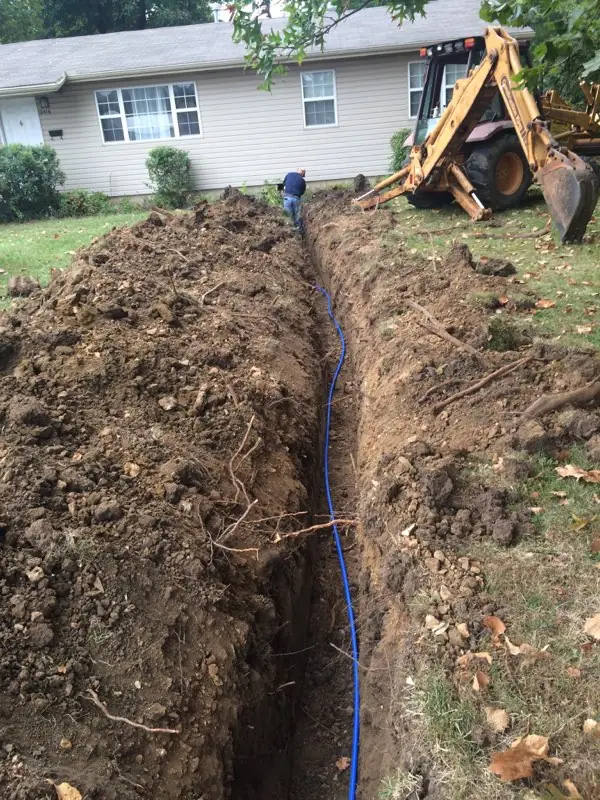
A fresh trench across a front yard with a new blue water line laid in it and a backhoe beyond
How we find it before we dig anything
Water pressure drops across the whole house. The bill jumps for no reason you can name. A damp or muddy spot shows up in the yard in dry weather, or the water runs rusty or discolored. The meter keeps turning with every faucet shut off, or you hear hissing or gurgling in the pipes. Any one of those is worth a call to (479) 236-1861.
We trace the line from the municipal meter to your house, because that is where most leaks hide. Past the meter, that stretch is usually the homeowner's to maintain, not the city's, and that surprises a lot of people in Lowell and Springdale. We confirm where the line is failing and tell you what we see, so you decide with the facts in front of you.
Chapter 03
How we replace it, with our own machines
We don't sub the digging out. Hansen runs its own excavator, backhoe and dump truck, so the crew that finds the leak is the crew that opens the ground, lays the pipe and hauls the spoil away. No waiting a week on an excavation outfit while your house has no water.
When the line has failed in more than one spot, we usually replace the whole run in new plastic instead of chasing patches. John made that call for Rick Simpson, and it is the call we still make. Where the yard allows, we can go trenchless. That means minimal digging, less damage to landscaping and driveways, less time on site and lower restoration work afterward.
We also repair water mains that were damaged by corrosion, shifting soil or roots, in any pipe material, and we work with the local utilities when the job reaches the meter. Fixtures stay a separate job, and so does everything past the wall. Our crews are Master Plumbers who are licensed, bonded and insured.
The five steps, start to finish
First comes inspection and diagnosis: we find the failure and trace the line. Second, we talk through your options, patch versus replace, trench versus trenchless, so nothing is a surprise later. Third is the repair or replacement itself, done to Arkansas plumbing code.
Fourth is testing and clean-up. We test the new line before it is buried for good, then the dump truck and backhoe put the yard back together as close to how we found it as wet clay allows. The fifth step is a final review with you and follow-up support if anything about the line or the yard bothers you after we leave.
Rick Simpson wrote on Hansen's own site that John arrived the next morning with the backhoe and crew, replaced the whole line, and had the water back on by the end of the day.