Trenchless vs Dug Water Line Replacement in Northwest Arkansas Yards
Replacing a water line no longer always means a trench across the lawn, though sometimes it still does.
October 6, 2026 · 4 min read
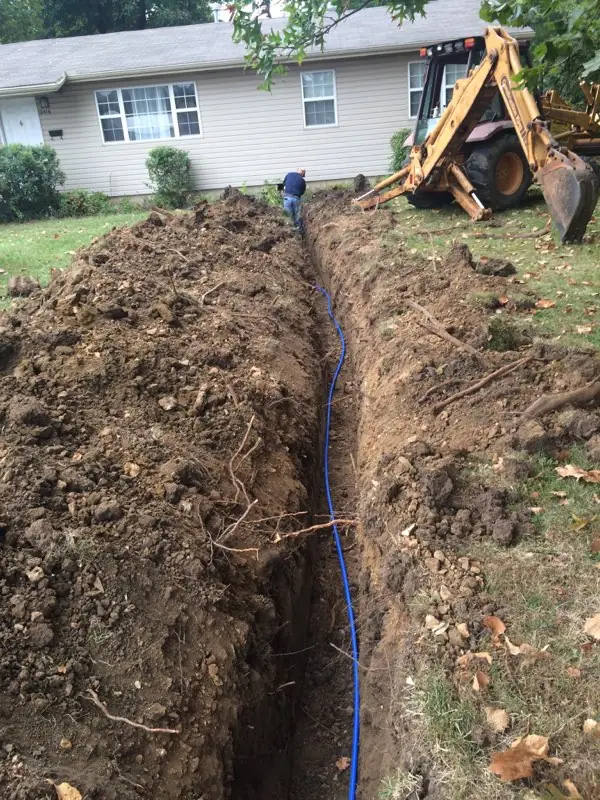
Two ways to replace a buried water line
When a yard line has reached the end of its life, there are two broad ways to get a new one in the ground. The traditional method is open trench: dig along the line, take out the old pipe, lay new pipe and fill the ditch. The other family of methods is called trenchless, and it replaces the line with minimal digging.
Neither is better in every case. The right choice depends on what's above the line, what's around it and what condition the old pipe is in. Here's how to think it through before you talk to a plumber.
How a dug replacement works
An open trench starts with locating the line and any other buried utilities, then opening the ground along its full length. The old pipe is removed or abandoned, the trench is prepared, new pipe goes in, and the connections at the meter and the house are made. Then the trench is backfilled, compacted and the surface restored.
The big advantage is visibility. When the whole line is open, you can see exactly what's down there: the rocks, the roots, the corroded sections, the bad fittings. The crew can bed the new pipe in clean material and check every joint. The cost is disruption. A long trench through a front yard, across a walkway or under a flower bed leaves a lot to put back.
How trenchless replacement works
Trenchless methods work from a couple of small access points, usually near the meter and near the house, instead of opening the full run. New pipe is pulled or pushed through the ground between those points, either along the path of the old line or along a new one. The yard between the two holes stays largely intact.
Hansen Plumbing Pro lists the benefits on its water line page, and they match what homeowners care about:
- Less damage to landscaping and driveways
- Less time to complete the work
- A long-lasting, durable replacement
- Lower restoration costs after the repair
When trenchless is a good fit
Trenchless earns its keep when something valuable sits over the line and you'd rather not rebuild it. Think of a concrete driveway, a stamped patio, mature trees you want to keep, a sprinkler system with a lot of heads, or a landscaped bed that cost you real money. It also helps when the yard is already soft or wet and a heavy trench would turn it into a mess.
When digging is still the better answer
Trenchless isn't magic, and a plumber who says it works everywhere is guessing. Open digging can be the better choice when:
- The old line has collapsed or shifted so much that nothing can be pulled through it
- The ground is full of large rock that deflects or damages new pipe on its way through
- The line needs to be rerouted around something, such as a new addition or a pool
- Other utilities cross the path in a way that makes blind work risky
- You want to see the soil and the pipe condition for yourself before deciding on anything else
Rocky Northwest Arkansas ground is a real factor. Pipe laid in a trench full of sharp rock is exactly how some older yard lines get punctured, and any method has to deal with that honestly, either by keeping the new pipe clear of the rock or by bedding it in clean material.
Soil, seasons and timing
Shifting clay and seasonal temperature swings are hard on water lines here, and they matter for the replacement too. Wet clay is heavy, sticky and slow to work, and a trench dug in a rainy week takes more effort to restore. Dry ground in late summer is easier on both the crew and your lawn, though a leak doesn't wait for good weather and the work can usually go forward in any season.
What a good inspection tells you
The method should come out of an inspection, not a sales pitch. A plumber should find the line, work out where it runs, and look at what's in the way. Then you should get a clear explanation of your options, trenchless and dug, with the reason for each. Hansen Plumbing Pro's own process starts with inspection and diagnosis, moves to a discussion of your options, and then to repair or replacement, testing and clean-up, and a final review.
That order is the right one. Decide the method after you know what's underground, not before.
Hansen Plumbing Pro serves Lowell, Springdale, Fayetteville, Rogers, Bentonville and the rest of Benton and Washington Counties, with trenchless options and its own excavating equipment for the jobs that need a trench. Our water and yard line work starts with free estimates. Call (479) 236-1861 and ask which method fits your yard.
Hansen Plumbing Pro, (479) 236-1861
Call (479) 236-1861More articles
Signs Your Yard Line Is Leaking Between the Meter and the House
The pipe buried in your lawn leaks quietly, and in most cases it is the homeowner's to fix.
Patch the Leak or Replace the Whole Yard Line
A patch is the cheaper-looking choice on day one, and sometimes it is the right one. Often it isn't.