Should You Repair or Replace Your Water Heater
Some water heater problems are a small part, and some are the end of the tank. The trick is knowing which you have.
October 6, 2026 · 4 min read
Diagnose first, then decide
A water heater that has stopped working feels like an emergency, and the urge is to replace it right now. Sometimes that is correct. Often it's an expensive guess. A failing thermostat, a bad heating element and a rusted-through tank all show up as the same thing at your tap, which is no hot water, and they have very different fixes.
Hansen Plumbing Pro describes its approach in a single line: either make the appropriate repairs or install a brand new water heater. The word that matters there is appropriate. The right answer comes from finding out what failed.
Problems that are often worth repairing
These issues usually involve a part, not the tank itself, and a repair can add years to the unit:
- A gas unit that won't stay lit, which can come down to the pilot or the part that senses it
- An electric unit with lukewarm water, which often points to a worn heating element or thermostat
- Water that is too hot or not hot enough because a thermostat has drifted
- A drip from a drain valve or a fitting at the top of the tank
- A relief valve that has failed or is dripping
If the tank is in decent shape and the unit isn't old, fixing the failed part is usually the sensible move.
Why a leaking tank usually means replacement
Water on the floor around a heater needs to be traced to its source before anything else. If it's coming from a fitting, a valve or a supply connection, that's repairable. If it's seeping from the tank body, you're looking at corrosion eating through the steel from the inside, and no part swap fixes that.
A tank that leaks only gets worse. The crack widens, the water damage spreads to the floor and the walls, and the unit can fail all at once. If you find water pooling and can't see a fitting dripping, shut off the water supply to the heater, turn off the power or gas, and call someone to take a look.
Age, sediment and the signs of a tired heater
Tank water heaters don't last forever. Minerals settle at the bottom of the tank over the years, and that layer makes the burner or elements work harder, makes noise and speeds up wear. Warning signs that a tank is nearing the end include:
- Popping or rumbling sounds when it heats, a sign of sediment baked onto the bottom
- Rusty or discolored hot water, but only from the hot side
- Repeated repairs in a short span of time
- A unit that is well past ten years old and costs more to keep running each season
- Moisture or rust streaks at the base of the tank
Age alone isn't a verdict, but it should shift the math. A repair on a very old heater is a bet on parts that are wearing out alongside the one you're replacing.
Ask for the reasoning, not just the recommendation. A plumber should be able to tell you what failed, why a repair will or won't last, and what the unit's condition says about the next few years. If the answer is only "it's old," keep asking.
The shutoff valve problem nobody plans for
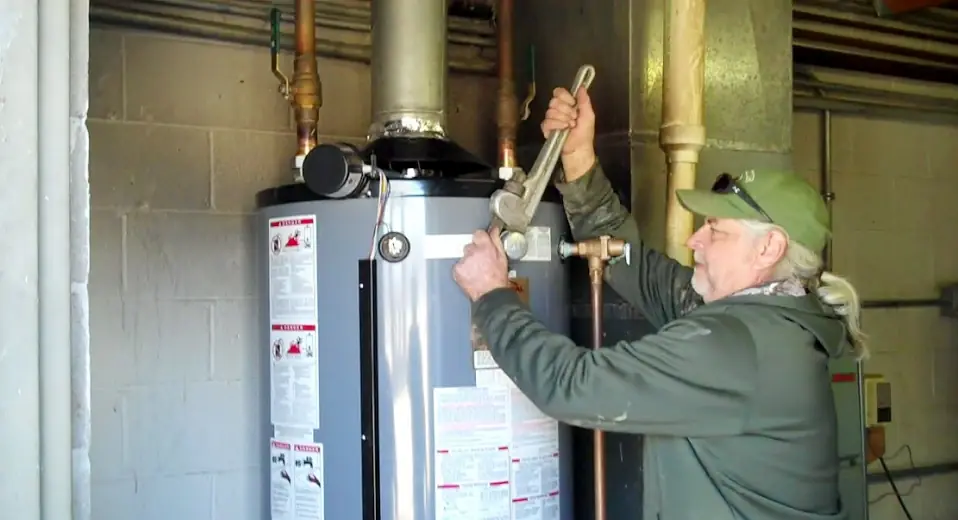
Here's a snag that catches homeowners off guard. The shutoff valve on the cold supply line to the heater is meant to let a plumber isolate the unit. On an older house, that valve may not have been turned in years, and a valve that's seized or that doesn't fully close can turn a simple swap into a bigger job.
If the valve won't shut, water can't be isolated at the heater, and the next valve up the line has to be used or replaced. It's worth asking when you schedule the work, and it's one more reason to let a plumber look at the whole setup before quoting a replacement.
A little maintenance goes a long way
- Have the tank flushed periodically to clear sediment
- Test the relief valve and look for drips or corrosion around it
- Keep the area around the heater clear, with no storage piled against it
- Check the base of the tank every few months for moisture or rust
If you ever smell gas near a gas-fired unit, leave the house and call your gas utility from outside. Don't hunt for the source yourself.
One customer, C. Kvamme, wrote in a Google review that Hansen Plumbing Pro replaced their water heater and "got it done quickly despite the late notice." Hansen Plumbing Pro repairs and replaces water heaters across Benton and Washington Counties and works on all brands. Estimates are free, and emergency calls are taken around the clock. Call (479) 236-1861.
Hansen Plumbing Pro, (479) 236-1861
Call (479) 236-1861More articles
Signs Your Yard Line Is Leaking Between the Meter and the House
The pipe buried in your lawn leaks quietly, and in most cases it is the homeowner's to fix.
Patch the Leak or Replace the Whole Yard Line
A patch is the cheaper-looking choice on day one, and sometimes it is the right one. Often it isn't.